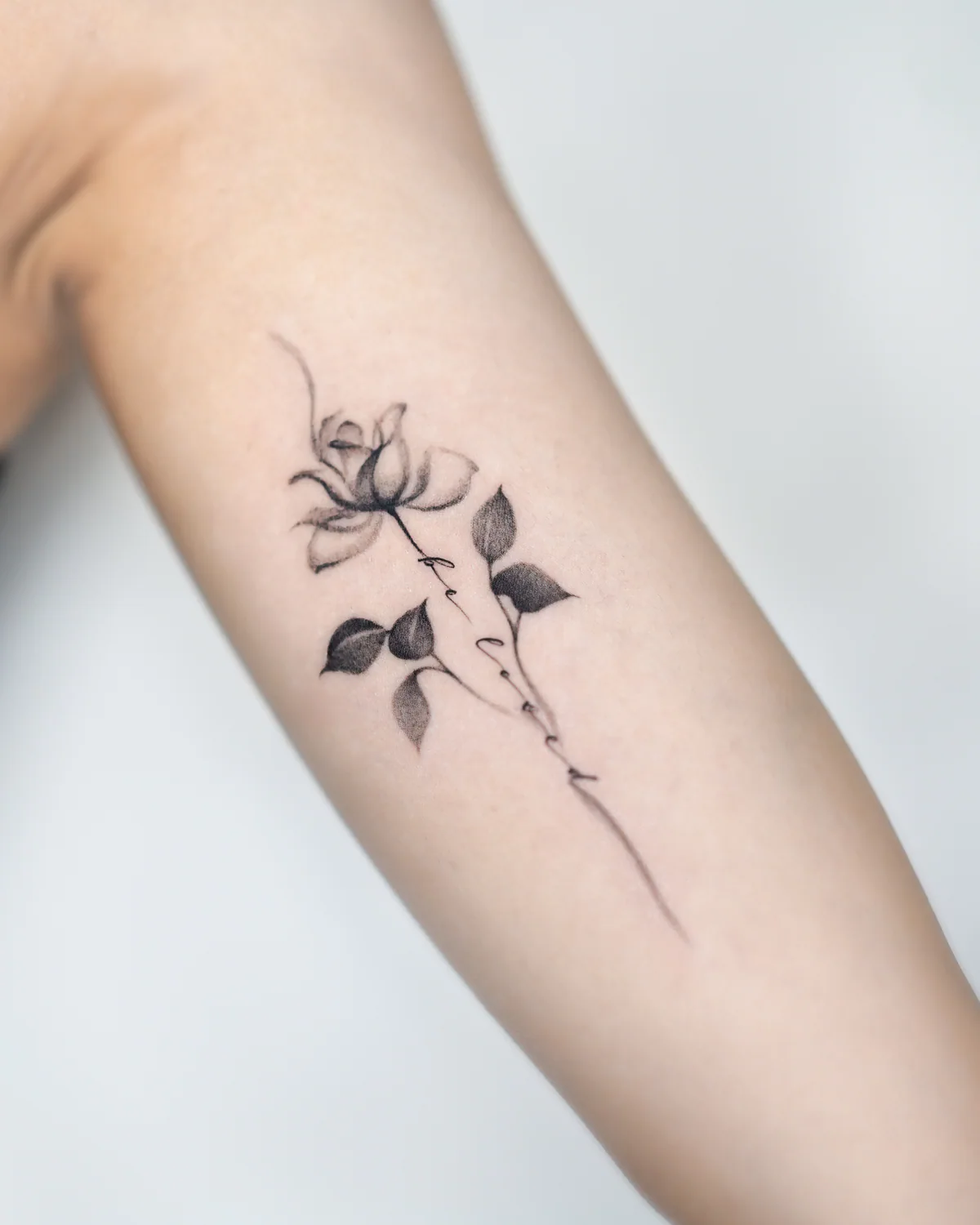
Every tattoo moves from the fresh stage through peeling and settling. Its appearance may then continue to change with skin, daily habits and sun exposure. Fine-line clarity depends less on a label or an extremely thin line than on whether the composition has enough room.
“Thicker” does not only describe the line
Fresh skin may be red or slightly swollen. Surface shine, camera distance and lighting also change how a line looks. Peeling and local unevenness during healing do not show the final result; wait until the skin has settled and view it in natural light.
Over time, skin renewal, the way ink appears through skin, friction and sun may make edges look softer. This does not mean every fine line changes at the same speed or by the same amount, and no responsible consultation can promise that a tattoo will remain as sharp as it was on day one forever.
Long-term clarity begins with four design choices
Scale
A larger floral has more room between petals, veins and lettering. A smaller version needs fewer elements.
Spacing
Lines that sit too close may visually merge once the work has settled, even if they look separate when fresh.
Placement
Movement, friction, curvature and sun exposure differ across the body, so density should respond to the area.
Hierarchy
Not every element needs the same line weight. Contrast, simplification and negative space help the subject read.
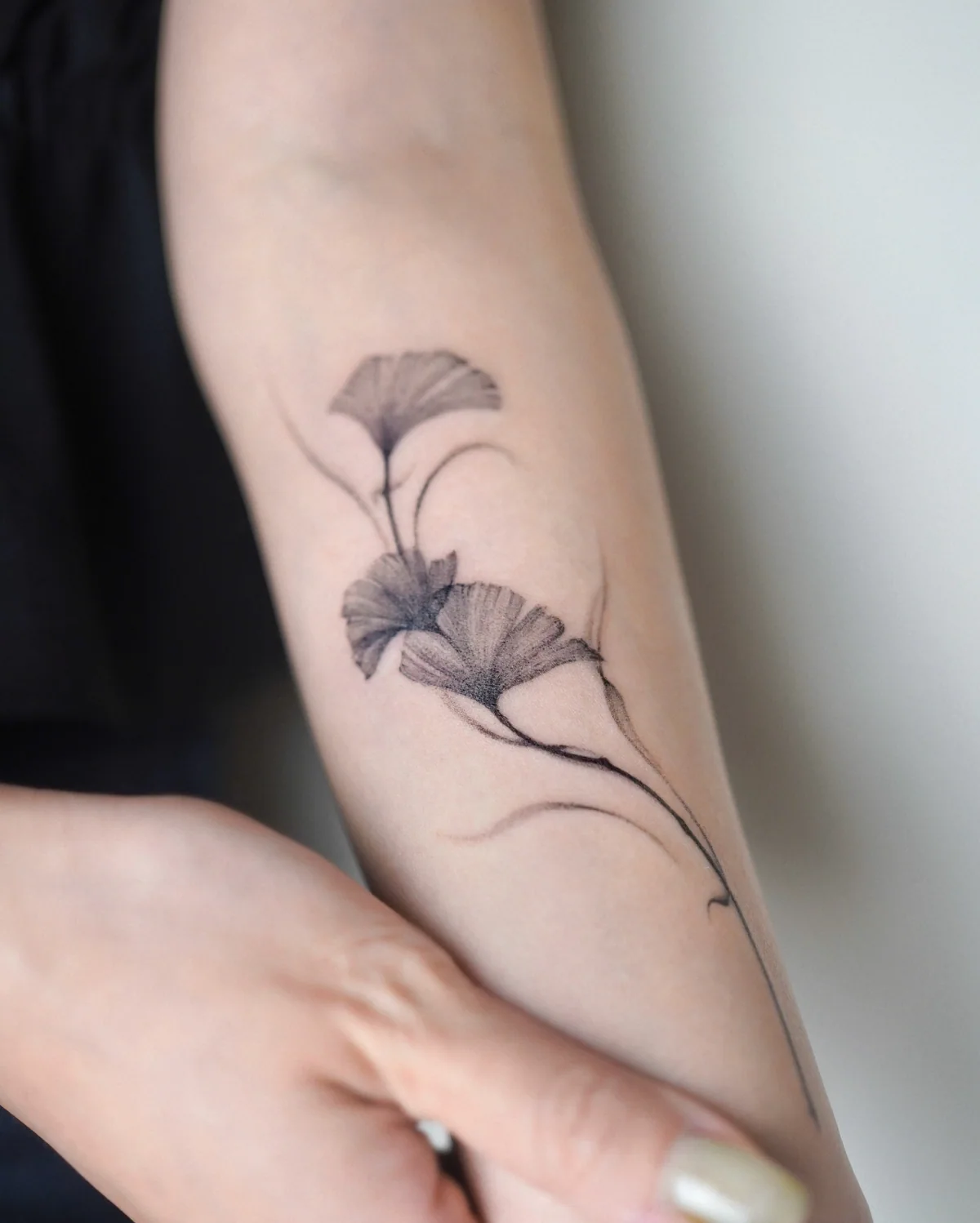
Small lettering is not a font scaled down
Counters, letter spacing and stroke weight determine whether English lettering remains readable at a small size. Chinese characters often contain more strokes, so complex type or longer wording may need more room. A quote considers wording, layout, placement and working time, not centimetres alone.
For handwriting, send the final correct wording and a clear original. The artist may adjust spacing, stroke weight or arrangement, but should not have to guess the phrase. Tiny Tattoo by Trois is a collaborative service that matches work by direction; it is not a fourth artist.
Placement changes how lines are read
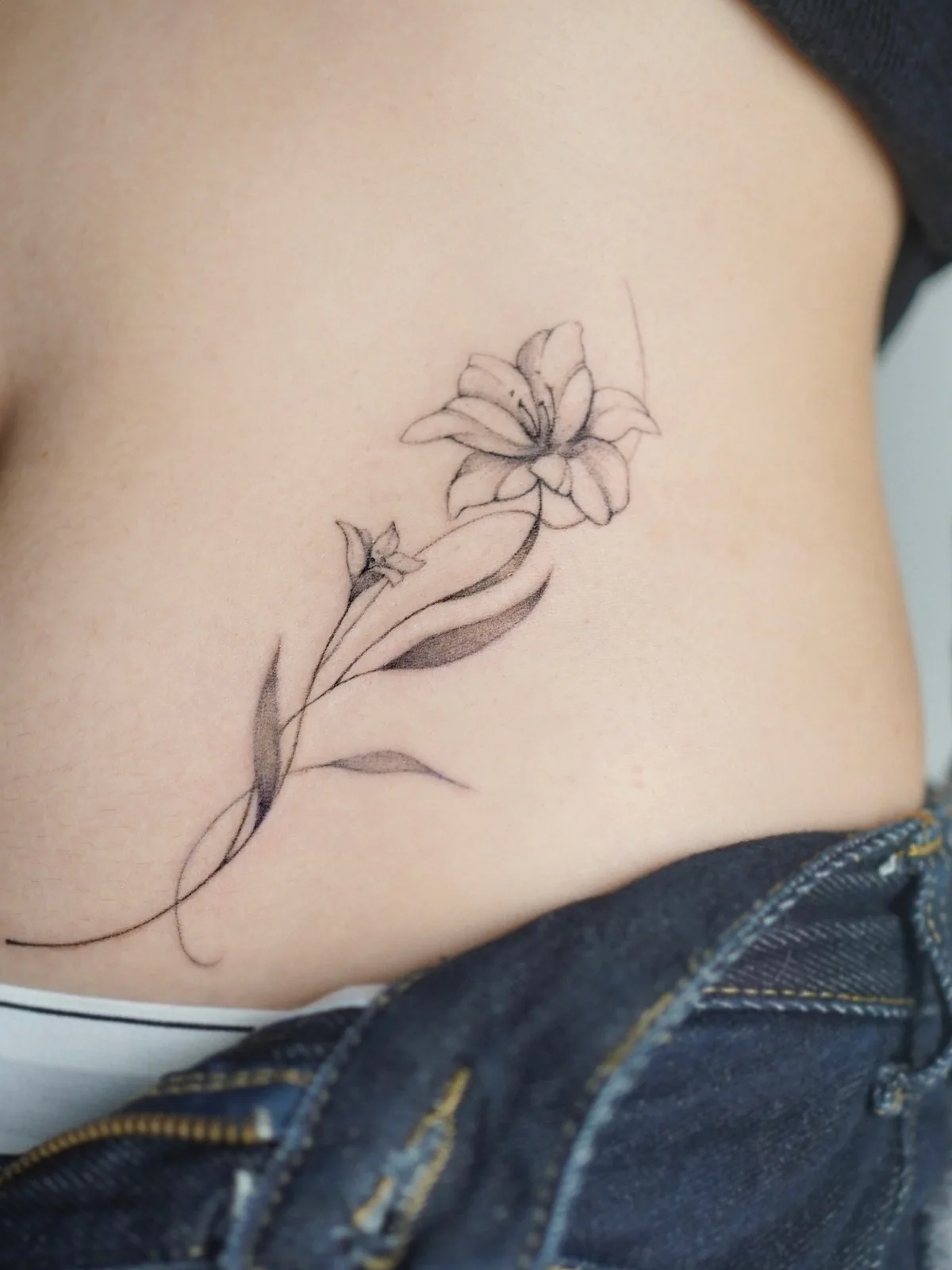
Fingers, wrists, ankles, ribs, collarbones and arms differ in movement, friction and curvature. A narrow area may suit a flowing vertical design, while a joint needs key details kept away from the point of greatest folding or distortion.
Consider clothing, work, exercise and sun exposure. There is no single best placement for every fine-line subject. A natural-light placement photo and approximate centimetre dimensions are more useful than “a small arm tattoo”.
Aftercare protects the healing environment
Follow the artist's individual dressing and cleaning instructions. Avoid picking, soaking, excessive friction and sun exposure before healing. After the skin settles, ongoing sun protection can reduce changes from UV exposure, but no routine can make skin a permanently unchanged canvas.
If redness, heat, pain or discharge is worsening, or you feel unwell, seek assessment from a qualified healthcare professional rather than relying on social-media photographs.
Prepare these six items before enquiring
- Subject: floral, butterfly, lettering, symbol or another small motif.
- Exact wording: spelling, case, punctuation and language.
- Placement photo: taken in natural light and showing the full available area.
- Centimetre dimensions: height and width, rather than “palm-sized”.
- References: explain whether you like the line, spacing, layout or mood; do not request a direct copy.
- Budget and dates: an acceptable range and available days.
Review Moon's fine-line work, the fine-line floral service or the Tiny Tattoo collaborative service, then share the closest direction.
Fine-line tattoo ageing FAQ
Do all fine-line tattoos get thicker?
Every tattoo may look different after healing and over time, but the amount varies. Scale, spacing, placement, skin, care and sun exposure all affect clarity.
Can a one-centimetre design keep many details?
It will usually need simplification. A single symbol, an English letter and a complex Chinese character require different amounts of room.
Will a fine-line tattoo need a touch-up?
Let the skin settle before the artist assesses it. Peeling or local unevenness during healing does not show the final result.
Does fine line last better than colour?
A style name alone cannot answer this. Design, ink, placement, skin, care and sun exposure all affect long-term appearance.