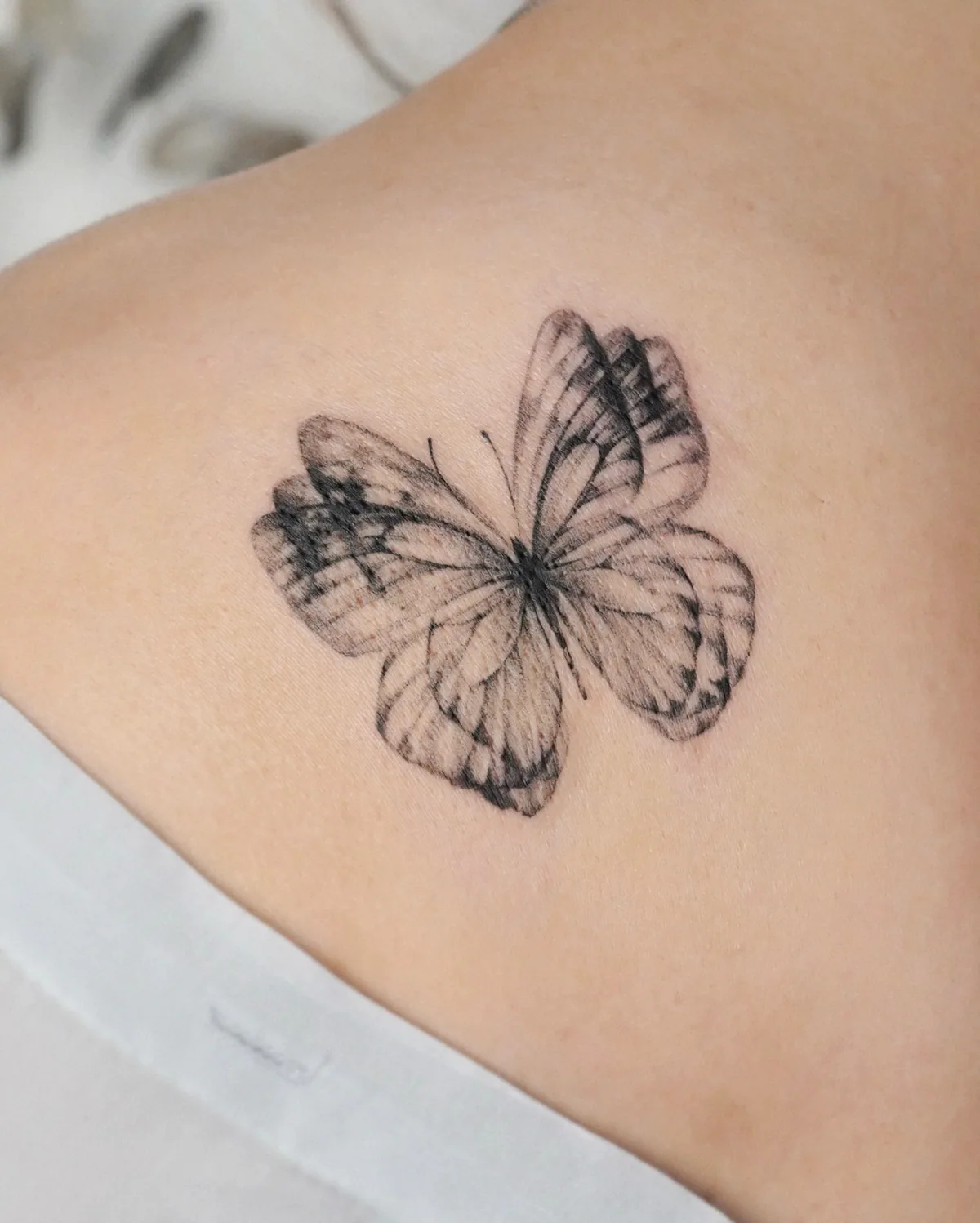
Flowers, plants and butterflies are familiar subjects, but every petal, leaf and wing has a different structure. Starting with the subject and adapting it to the body creates a more personal result than copying a finished tattoo.
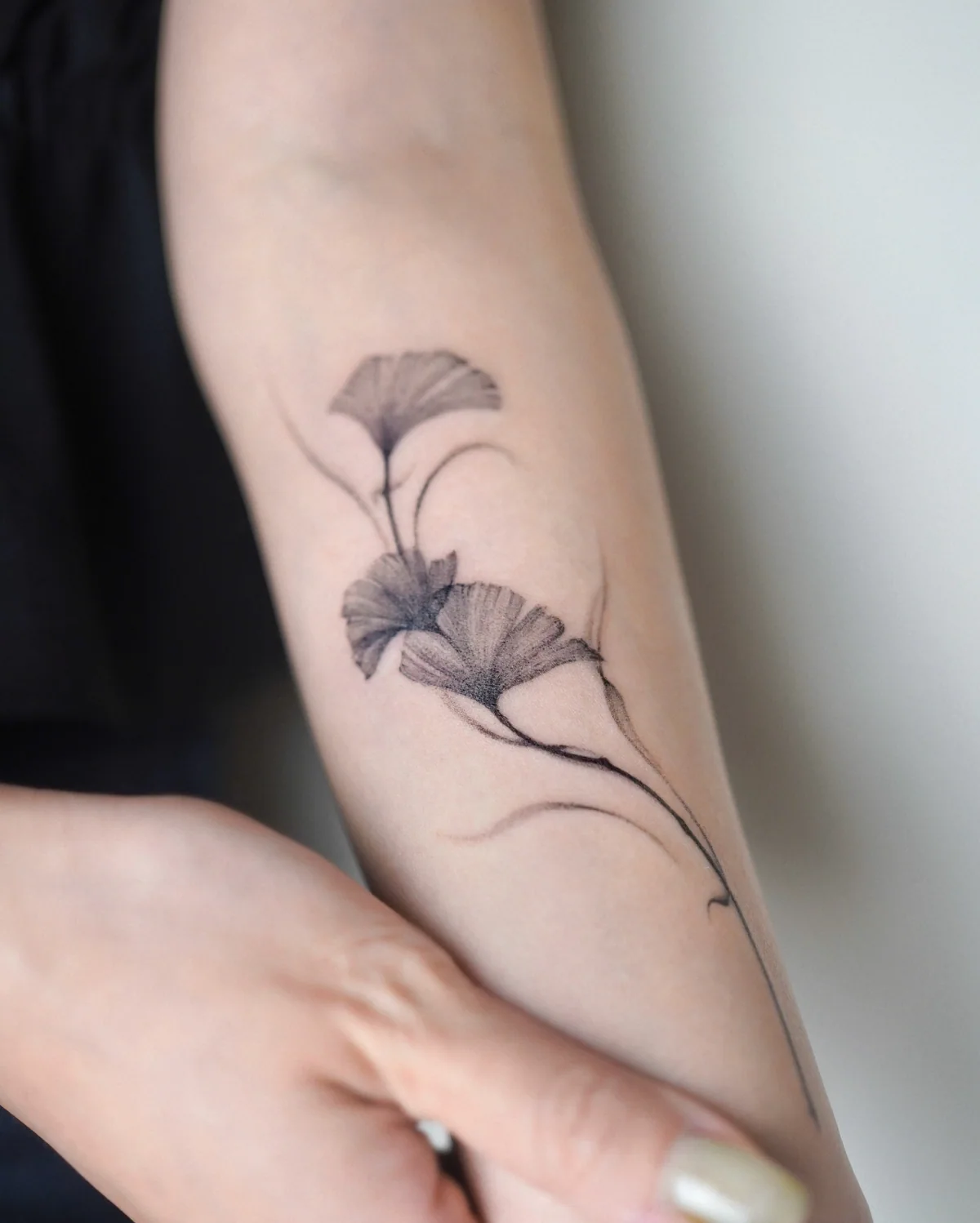
Start with flower and form
A rose's layered petals, a lily's long shape, a daisy's radial structure and a vine's movement all need different spacing. For a butterfly, decide between realism, specimen detail, light linework or a composition that merges into flowers.
A fixed symbolic meaning is optional. Tell the artist whether the plant, season, memory or visual rhythm matters to you, and what you do not want included.
Let placement guide the composition
- Collarbone and shoulder blade: use a horizontal or diagonal flow instead of a centred sticker shape.
- Forearm and calf: suit vertical stems, single blooms and directional butterflies.
- Ribs and waist: can follow a longer curve while considering clothing friction.
- Wrist, finger and ankle: need more restraint because of scale, movement and wear.
Send a natural standing placement photo so the artist can assess the design at real body scale.
Fine does not mean infinitely thin
Tattoos change naturally with skin and time. Petal spacing, wing patterns and leaf veins can become difficult to read if crowded too tightly. Useful scale and negative space matter more than chasing the finest line possible.
FAQs
Is the finest line always best?
No. Line weight must suit scale, placement, density and how the design may change over time.
Does every flower need a symbolic meaning?
No. A memory, season, shape or visual preference is enough to begin a personal design.
Should a butterfly be symmetrical?
A central placement may suit symmetry; shoulders, waist and arms often benefit from a natural tilt.