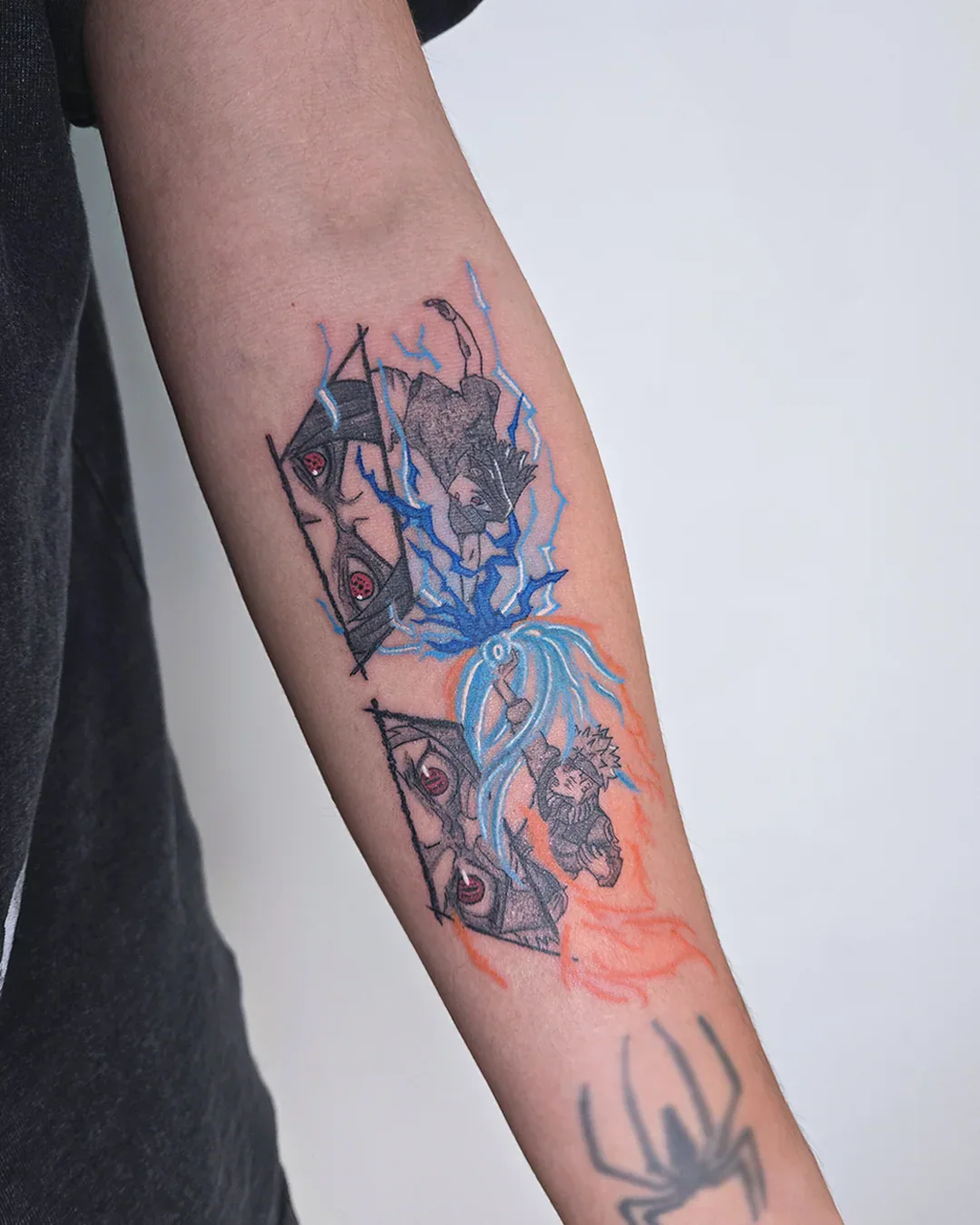
A useful anime tattoo reference set is not every screenshot saved from Pinterest, Instagram and the series. Each image should answer one question: which version, what must remain recognisable, how should the image move, which colours matter and where it will sit on the body.
Prepare a small set with four clear purposes
Character identity
One clear official image showing the hair, costume, expression, prop or defining features.
Pose and framing
One or two references for a portrait, full-body action, panel, scene or the visual rhythm you prefer.
Palette and mood
Identify signature colours, lighting and atmosphere, plus colours that may be simplified or changed to black and grey.
Placement photograph
Photograph the intended area in natural light and provide approximate centimetres for a realistic composition assessment.
One or two images in each category is enough to begin. If you send more, label them “expression”, “pose” or “colour only” so the purpose is clear.
The same character can have several versions
Anime seasons, manga, films, costumes and transformed states can change hair, props and palette. Include the title, character name and version. If the version is flexible, identify the feature that matters most.
References should show the face and important details as clearly as possible. A low-resolution older screenshot is still useful for an initial enquiry, but a small tattoo may not hold every line. The artist may recommend clearer material, a larger scale or fewer secondary elements.
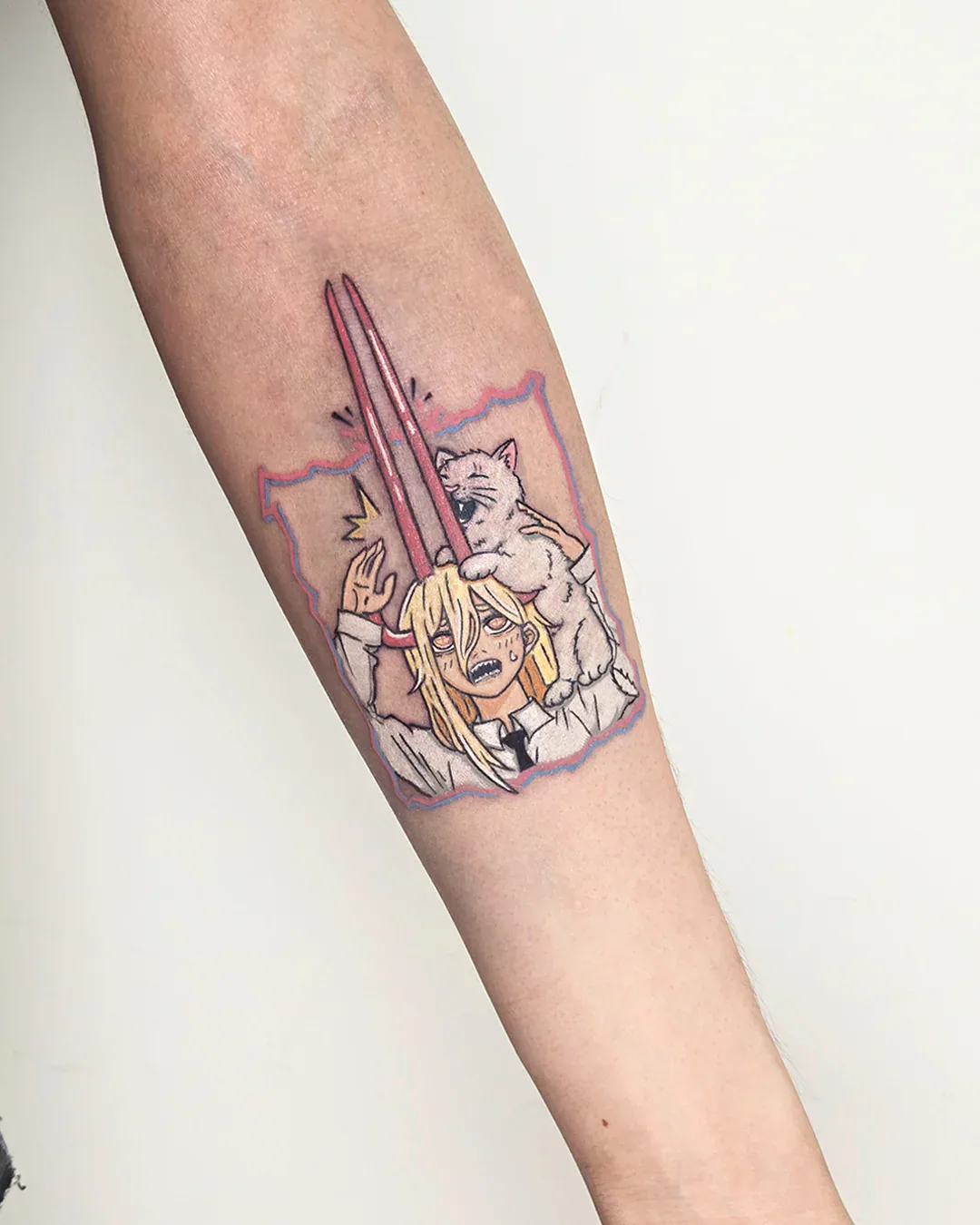
References must be considered with placement and scale
The same image needs different cropping on a forearm, calf, upper arm or back. Narrow areas may suit a standing pose, directional action or vertical panels. Wider areas can hold a portrait with background relationships. Space around joints also helps movement and readability.
Faces, hands, costume, weapons, lettering and background all require room. When the placement is small, a close-up, defining prop or one recognisable movement can read better than a complete poster reduced to a tiny scale.
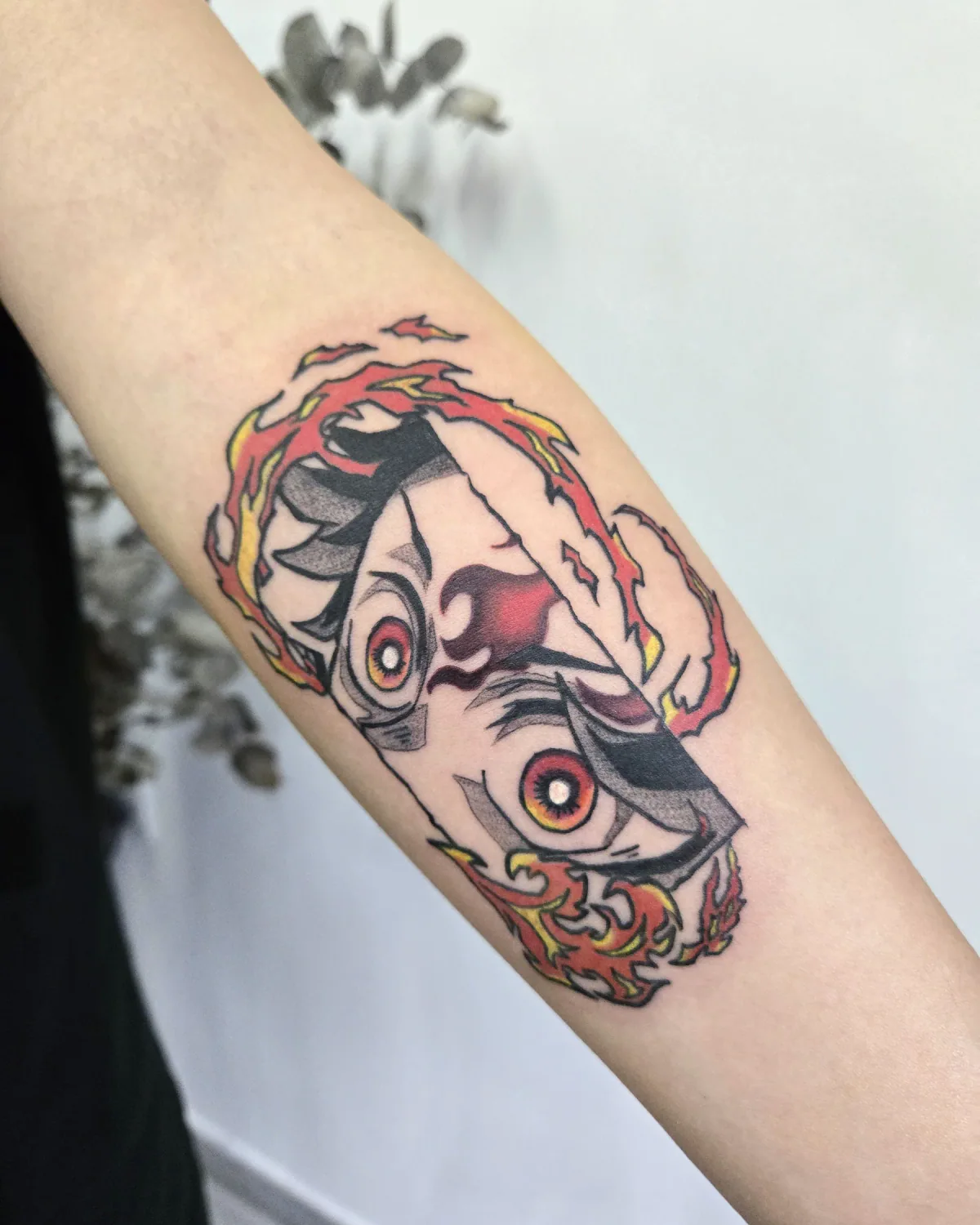
Use other tattoos to explain direction, not request a copy
You may share another tattoo to identify panel framing, line weight, colour blocks, negative space or atmosphere. It should not be requested as a direct copy of another artist's finished design. Pair it with original character material and your own requirements so LC can rebuild the composition for your body.
If you want a name, date, floral element, symbol or Hong Kong reference added, identify what must stay and what the artist may adjust. That produces a clearer direction and quote than saying only “something similar”.
Use this checklist for the first WhatsApp enquiry
- Series and character: title, character name and chosen version.
- Three reference groups: identity, pose or composition, and colour or atmosphere, each with a purpose.
- Must keep: expression, costume, prop, lettering or signature colours.
- May remove: secondary characters, background, effects or unnecessary text.
- Placement and size: natural-light placement photograph and approximate centimetres.
- Budget and dates: workable range, weekday or weekend preference and available dates.
Review LC's colour anime portfolio and the anime, cartoon and character tattoo service, then include the closest work in your message.
Anime tattoo reference FAQ
Can I use an anime screenshot?
Yes. It can identify the version, expression, pose or mood. The final composition is still adapted to placement, size and defining features.
How many images should I send?
A small set with clear purposes is usually more useful. Start with character identity, pose or composition, and colour or mood, with one or two images in each group.
What if the only reference is low resolution?
You can still enquire, but identify the essential features. The artist can assess whether other source material, a larger scale or reduced detail is needed.
Can the tattoo match the exact screen colour?
A glowing screen does not reproduce colour in skin. The palette must account for skin tone, neighbouring contrast, scale and long-term readability.