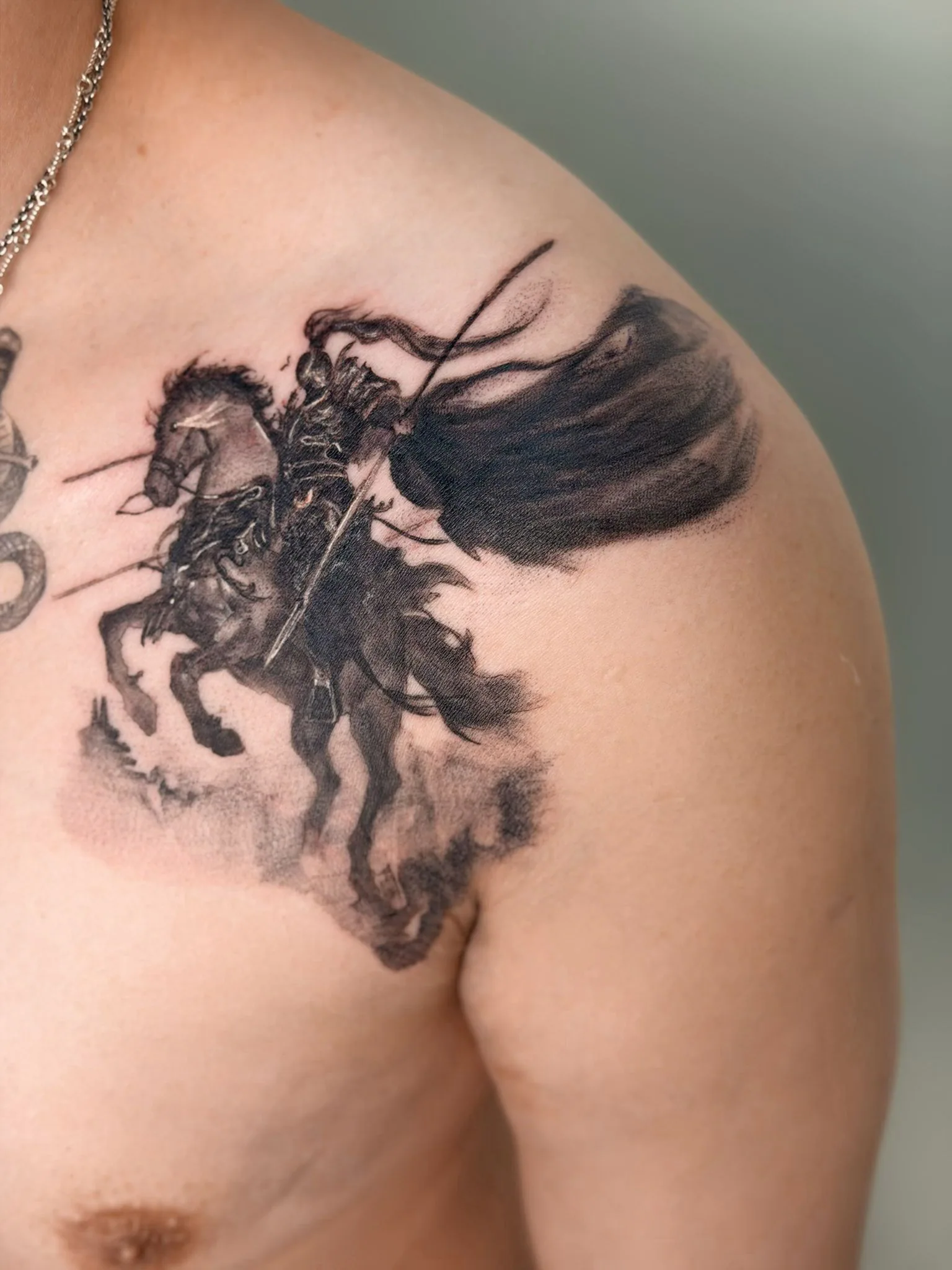
A style label is not a fixed recipe. A useful consultation starts by asking whether you want a piece to feel like a painting, a photograph, or a black-and-grey composition that moves with the body.
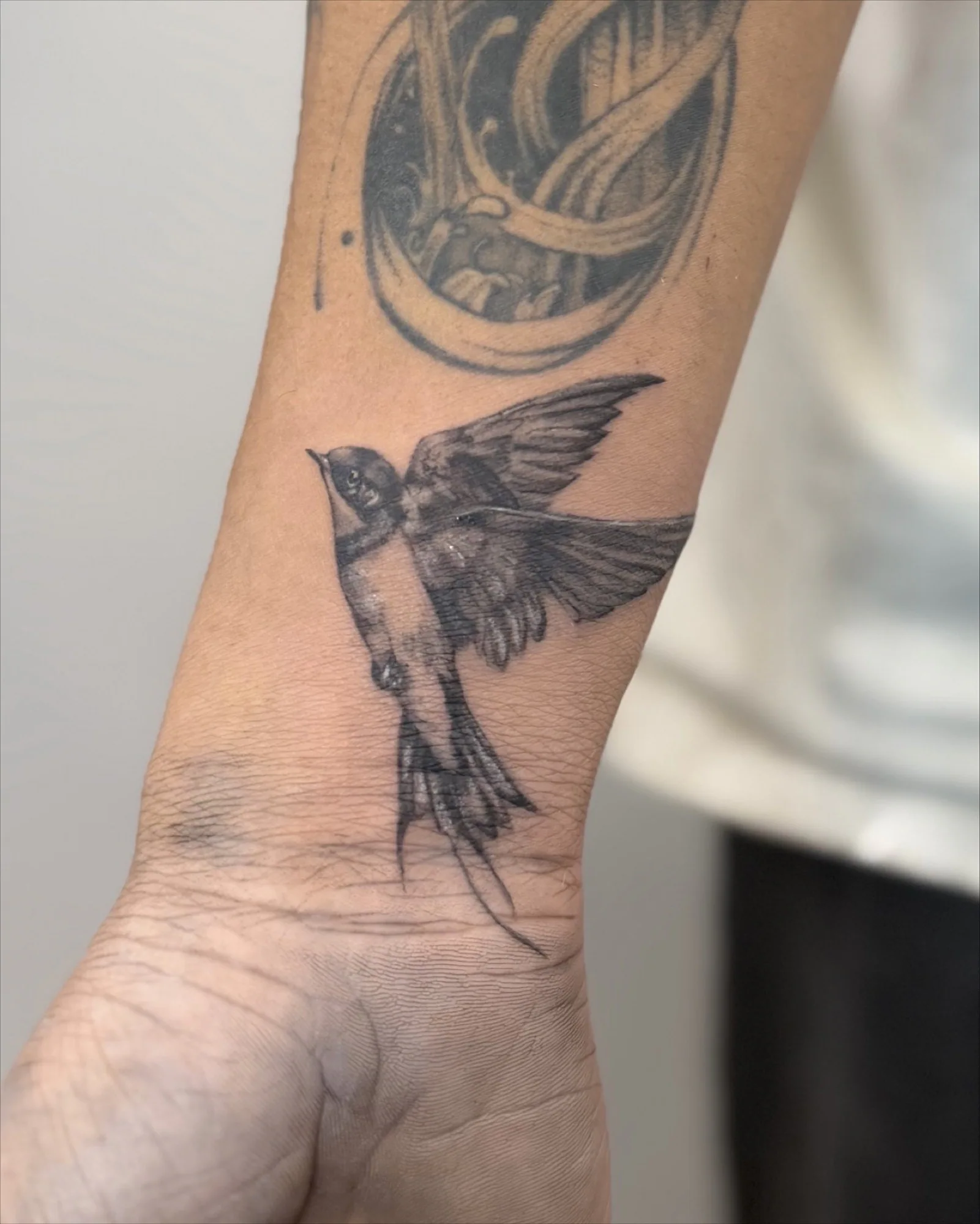
Three black-and-grey languages
Ink wash: movement and negative space
Ink-wash tattooing borrows from dry brush, tonal blooms and open space. It does not always aim for photographic realism. Animals, landscapes and abstract forms can work well, but the ink shapes must be redesigned for the body's curves.
Black-and-grey realism: light and material
Realism depends on value structure, proportion and texture. Metal, fabric, statues, fur and cinematic scenes need enough mid-tones for the subject to remain clear from different viewing distances.
Portraits: likeness and expression
A portrait's identity comes from more than an outline. Eyes, expression, light, hair and background contrast all matter. Memorial work benefits from several clear, unfiltered photographs rather than a single compressed screenshot.
Choose placement and size together
Forearms, calves and upper arms suit vertical subjects; chest, shoulder and back areas can hold larger scenes. Facial features, armour detail and ink-wash texture need room. Let the body and composition establish a useful scale instead of forcing every element into a preselected number.
What to send with an enquiry
- The subject, memory or feeling you want to retain.
- Separate references for light, brushwork and composition.
- A placement photo and approximate centimetres.
- Several clear images if the subject is a real person.
- Whether the work should remain standalone or grow into a sleeve or back piece.
The references guide an original composition; they are not instructions to copy another artist's finished tattoo.
FAQs
Is ink wash the same as realism?
No. Ink wash favours brush movement and negative space, while realism gives more weight to proportion, light and texture.
Does a portrait need to be large?
Scale depends on facial detail, placement and composition. Very small work limits features and tonal transitions.
Can several images be combined?
Yes. Label what matters in each image so the artist can assess angle, lighting and composition.