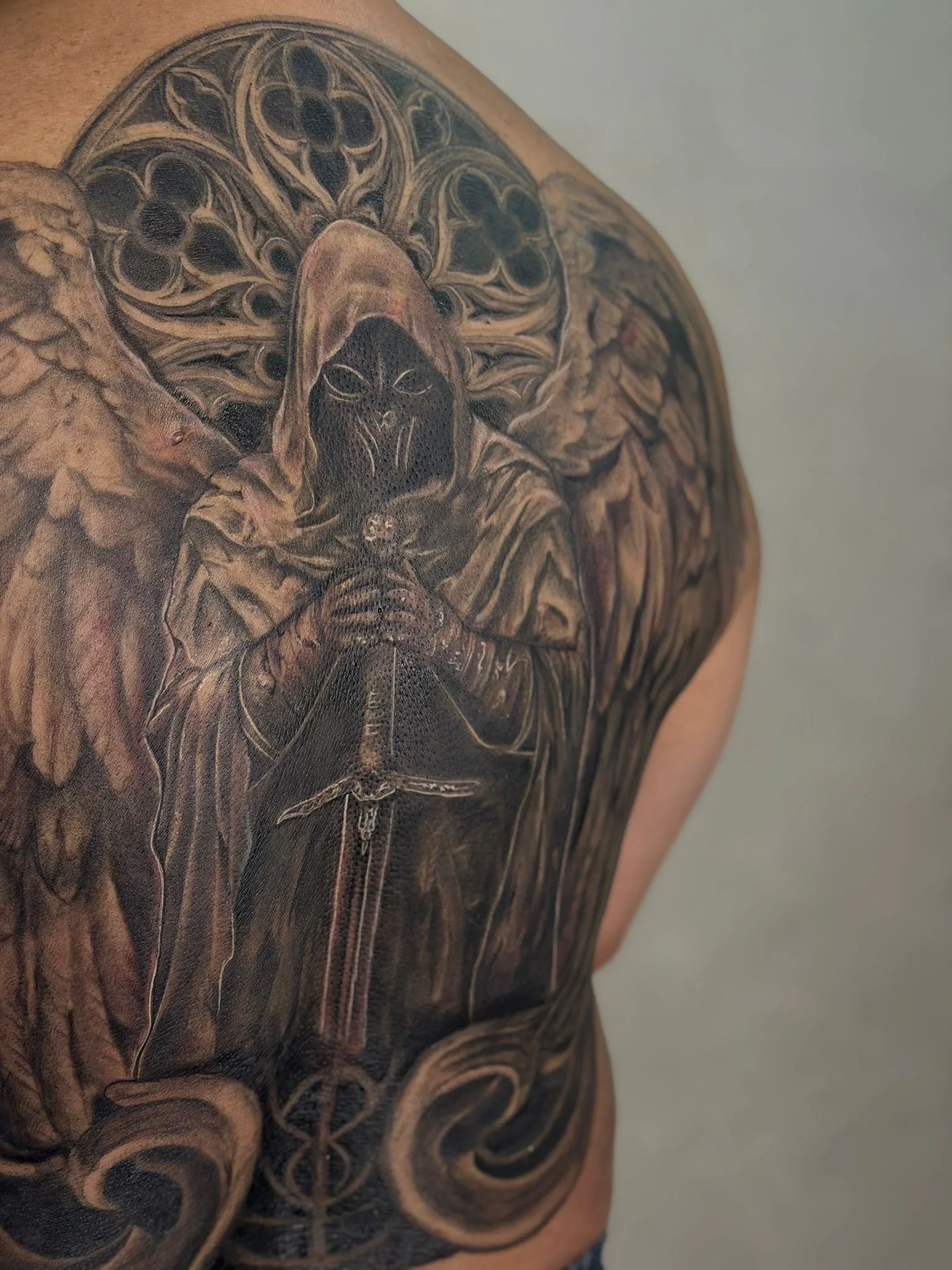
Portrait tattooing is not photo printing. The artist identifies the person's most recognisable features, then translates the image into a composition that works on skin.
A useful main reference
- Sharp focus: eyes, nose, mouth and hairline retain real information rather than messaging-app compression.
- Directional light: gentle side light often reveals more form than flat flash; heavy shadow and overexposure remove detail.
- Natural perspective: avoid close wide-angle distortion and send other images from a similar angle where possible.
- Limited retouching: beauty filters change face shape and texture and can weaken likeness.
Old and imperfect photographs
An old print, backlit group photo or small social screenshot may still carry the most important memory. Be open about its limits. Several images can sometimes restore context; in other cases a silhouette, semi-realistic approach or supporting symbol may preserve the story more honestly than invented facial detail.
For a celebrity or film character, explain whether the identity, expression, costume or overall mood matters most. Do not request a line-for-line copy of another tattoo artist's finished work.
Send these details together
- One main image and three to five supporting photographs.
- The expression, clothing, object or text that must remain.
- Body placement, side, approximate size and background preference.
- The unedited original file rather than only a screenshot.
FAQs
Can an old low-resolution photo be used?
Send the original for assessment. Missing detail may require more images, a simpler composition or a more illustrative approach.
Can I use a celebrity photograph?
It can guide the direction, but rights may apply and the tattoo should be reinterpreted rather than copied.
How many photographs should I send?
Three to five labelled images are normally more useful than a large unfiltered folder.